Coordinating Transaction Processors with Real-Time Dealer Interfaces in Portable Wagering Networks

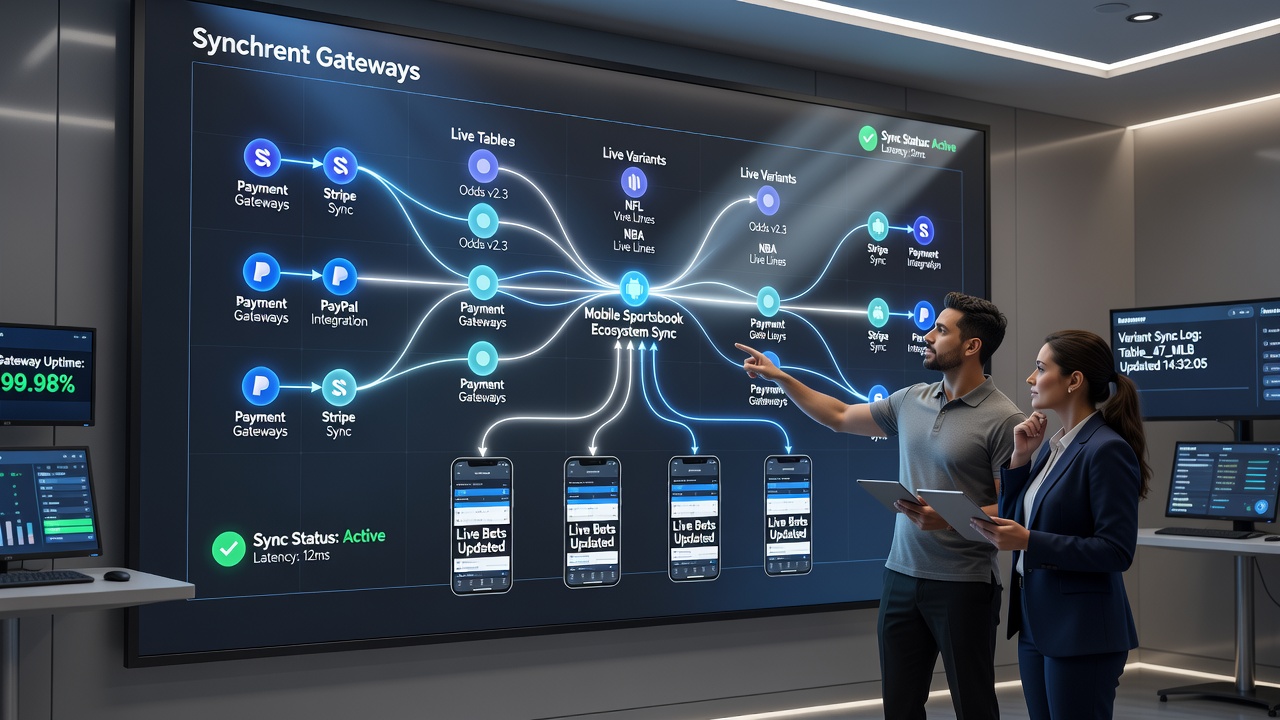
Payment gateways connect directly to live table modules in mobile sportsbook platforms through standardized APIs that handle instant balance updates during active dealer sessions. These connections allow users to place wagers on variants such as blackjack, roulette, and baccarat without exiting the live stream or reloading separate financial interfaces. Data from platform operators shows that synchronization reduces transaction latency to under two seconds in most implementations, which supports continuous play across fluctuating network conditions.
Core Technical Components Driving Integration
Developers rely on token-based authentication systems paired with event-driven webhooks to push payment confirmations into live table streams in real time. When a deposit completes, the gateway notifies the table engine, which adjusts available betting limits immediately. Studies from the University of Nevada Reno Gaming Innovation Lab indicate that platforms using WebSocket protocols for these updates maintain 99.7 percent uptime during peak evening hours.
Live table variants require distinct data fields, including side-bet options and progressive jackpot trackers, so gateways incorporate modular payloads that adapt to each game type. This flexibility lets operators add new variants without rebuilding the entire payment layer. In July 2026, several major networks deployed updated SDKs that standardized these payloads across Android and iOS environments, cutting integration time by roughly 30 percent according to internal deployment logs shared at industry forums.
Security Protocols Across Mobile Ecosystems
Encryption standards such as TLS 1.3 combined with device-specific biometrics protect data exchanged between payment processors and live dealer servers. Regulators in multiple jurisdictions now require end-to-end logging of every synchronized transaction, creating audit trails that span both financial and gaming databases. The Australian Communications and Media Authority published guidelines in early 2026 emphasizing continuous monitoring for anomalous patterns that could signal either payment fraud or game manipulation attempts.
Multi-factor verification steps occur in the background while players remain focused on dealer actions, preserving session continuity. Observers note that this layered approach has lowered chargeback rates on synchronized mobile platforms compared with traditional separate-wallet models. One documented case involved a European operator that reduced disputed transactions by 22 percent after routing all live-table payments through a single gateway with built-in velocity checks.
Regional Regulatory Influences on Implementation
Different markets impose varying requirements on how quickly funds must appear in live betting interfaces. Canadian provincial frameworks, for instance, mandate that approved gateways complete verification within five seconds for all real-money table games accessed via mobile. Platforms serving those regions therefore prioritize low-latency regional servers rather than centralized cloud instances.
Meanwhile, operators in Asia-Pacific territories follow data-localization rules that keep transaction records within national borders even when the live dealer feed originates elsewhere. This separation adds complexity to synchronization but ensures compliance with local financial reporting standards. Industry reports from the Canadian Gaming Association highlight that operators investing in geo-fenced payment nodes experienced fewer regulatory queries during 2026 audits.
Performance Metrics and Scaling Challenges
Load testing conducted by platform providers reveals that synchronized systems handle up to 12,000 concurrent live-table sessions per gateway instance before additional nodes activate. Peak traffic during major sporting events often coincides with surges in table game activity, requiring auto-scaling mechanisms that spin up payment microservices in tandem with game servers.
Network variability on mobile connections remains a persistent variable; however, fallback protocols that cache authorization tokens allow brief offline periods without interrupting table play once connectivity returns. Data compiled by the European Gaming and Betting Association shows average session durations increased by 18 percent on platforms that implemented these caching layers compared with earlier non-synchronized versions.
Future Development Directions
Emerging 6G testbeds and edge-computing nodes promise further reductions in round-trip times between payment confirmation and table response. Several operators have begun pilot programs that embed lightweight wallet functions directly into the live dealer client, eliminating separate gateway redirects entirely. These trials focus on maintaining regulatory separation between financial processing and game logic while still delivering the appearance of unified operation.
Continued refinement of open banking interfaces also allows direct account-to-wallet transfers without traditional card rails, which could streamline funding for live table variants even more. Observers tracking these developments expect broader adoption once additional jurisdictions finalize technical standards for open-finance integrations in gaming contexts.
Conclusion
Synchronization between payment gateways and live table variants has become a foundational requirement for competitive mobile sportsbook ecosystems. The combination of real-time APIs, robust security layers, and region-specific compliance measures enables operators to deliver uninterrupted play while meeting evolving regulatory expectations. As infrastructure continues to advance, the technical gap between financial processing and live dealer experiences narrows, resulting in more cohesive user sessions across devices and markets.